
 The Middle East Film Festival
Relationships :
Love Across the Divide - Where Are the Romeo & Juliet Stories?

Early on in our discussions about Middle Eastern cinema, my friend and prospective podcasting partner Fabrizio Macor asked me a superficially straightforward question: “Are there any Romeo & Juliet stories? You know, an Israeli and a Palestinian who fall in love?” It’s already assuming something that he asked for Romeo and Juliet stories, and not for romcoms; but right enough - it would seem sensible enough to assume that there’s more tragedy than comedy.
Even though I had this post queued up in my drafts, I hadn’t yet properly thought about the questions around it. The short answer to Fabrizio’s question is that there are not many films that tackle the subject, and most of them end (read no further if you don’t want spoilers………) not especially happily. But if you’ve not been sitting on a rock in the Pacific Ocean that can’t be a spoiler. Everything that readers know about the Israeli-Palestinian conflict, as with many other conflicts in the Middle East, sadly, should prepare them for it. Cultural and religious barriers, along with official political restrictions, make cross-community relationships all but impossible.
A longer answer to Fabrizio’s question requires us to think about which relationships have more chance than others, and what that tells us about the conflict itself.
Before jumping into the fictional accounts, it is of course worth mentioning that such relationships do exist in real life, and that what we see in fiction is not an empty idealisation. I recently listened to a beautiful podcast interview with an Israeli Jewish woman who married a Palestinian man, and who lives with him and their children on the West Bank. Careful listening to the podcast - find it here - will however reveal how strange and difficult are the circumstances of their life together.
Let’s be very explicit, if it hasn’t been stated enough already: choosing Romeo and Juliet as a starting point isn’t a template for optimism. If there’s anyone out there who doesn’t know the story, they both die at the end. The lovers are destroyed by the hatred between their families, and only the deaths of the young lovers bring the feuding Montagues and Capulets to their senses. Let us not be surprised if Israeli-Palestinian love stories follow a similar tragic arc, and furthermore let’s not in this case assume that the death of the lovers will bring the two sides together, alas. The question is whether cinema can imagine any other ending, or whether the weight of political reality makes a happy ending impossible. Worse than that, even, would a happy ending to a narrative be in some way unfaithful to the respective communities?
Films Covered in this Post
There might be more, of course, which I have yet to stumble upon, but I’ve identified and located only five films that centre on (or which at least feature) romantic relationships - in the sense that they are non-platonic, whether consummated or nearly consummated - across the Israeli-Palestinian/Arab divide. Thin pickings, really, considering the amount of output especially on the Israeli side. Here they are:
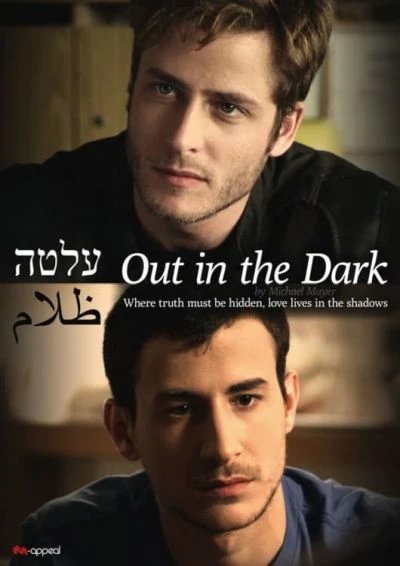

- Out in the Dark (2012) - A Palestinian student from Ramallah and an Israeli lawyer in Tel Aviv, in a forbidden gay relationship.
- The Bubble (2006) - An Israeli from Tel Aviv’s liberal bubble and a Palestinian from the West Bank, once again in a gay relationship
- A Borrowed Identity (2014) - A Palestinian Arab in two relationships with Israeli Jews - one of them classically “straight”, the other with a possible queer subtext, depending how complicated you want to be about things.
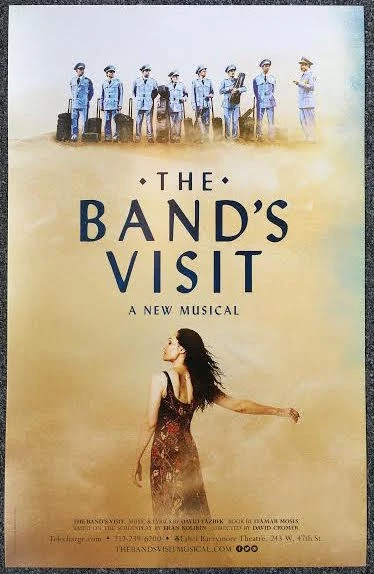
- The Band’s Visit (2007) - An aging Egyptian orchestra conductor and his deputy find themselves in a strange fleeting relationship with an Israeli café owner in a small town in the Negev.
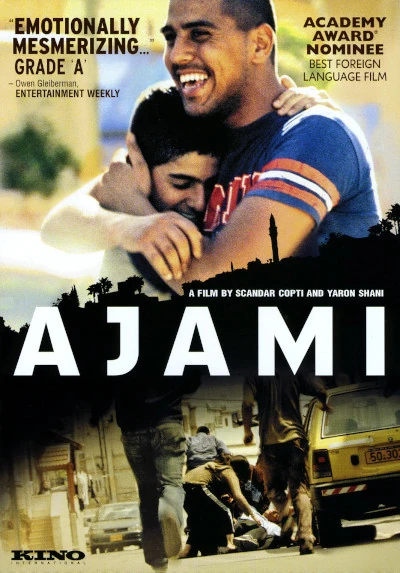
- Ajami (2009) - One of many stories in this complex film features an Arab chef in Jaffa who is in a relationship with a Jewish woman from Tel Aviv.
Besides these five, I have two films that explore hopeful “odd couple” platonic relationships. No coincidence, perhaps, that both of them star the incomparable Qais Nashef. The difference between the two characters is vast, but he stamps both roles with something that is unmistakably his own.
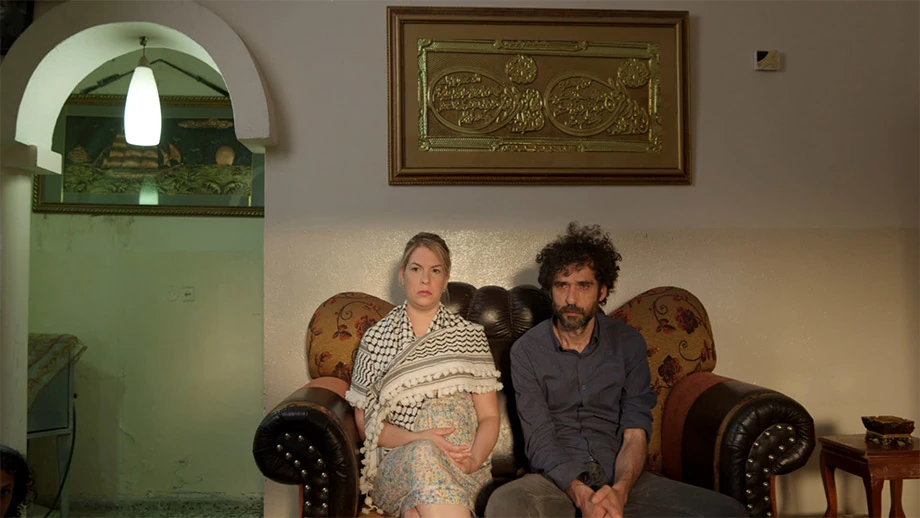
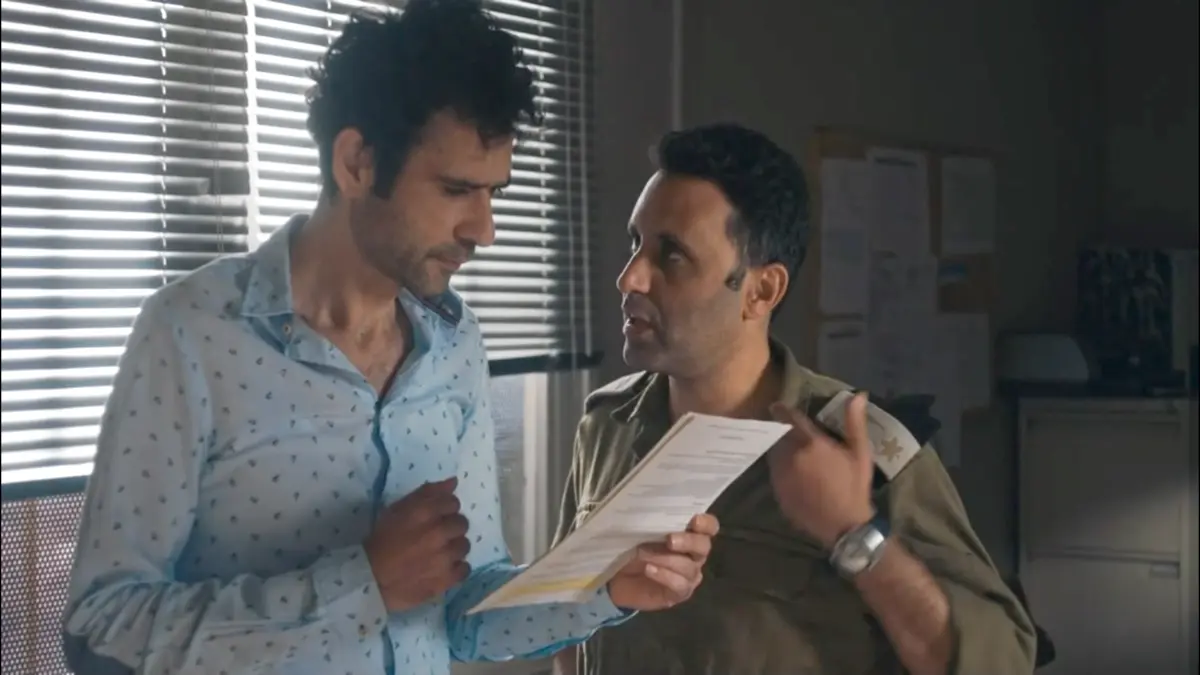
- Abu Omar (2021) - A Jewish Israeli woman and a Palestinian man from the West Bank bond in tragic circumstances.
- Tel Aviv On Fire (2018) - A Palestinian writer on a soap opera and an Israeli checkpoint commander (male-male bromance) bond in the much lighter context of the Israeli’s interest in the soap opera
What immediately strikes anyone looking at this list is of course how small it is. I’ve catalogued over 120 Israeli and Palestinian films by now, and at this point I’ve watched the vast majority of them. If there are any films remaining that belong in this article, I will have to edit later, but it is already possible to conclude that cross-divide romances are not a major genre.
There is something else that is worth noting: of the five genuinely romantic films that I’ve cited, two of them - Out in the Dark and The Bubble - involve gay relationships, and we can perhaps bump that number up to two and a half if we accept a possible queer reading of A Borrowed Identity. With such a small sample size, there is no way to say that this proportion is statistically conclusive. If it were twenty films out of a sample of forty, we could speak with some authority. I’m not really into the application of statistics in the humanities, though, so I’m boldly going to say that the overrepresentation of gay/queer films is notable and worth exploring.
Thinking about this question evoked to my mind a film that is familiar to many or even most of those my age and native to the British Isles - The Crying Game. I’m not going to labour that comparison here, though. It’s for a future post, perhaps, but it’s a reminder that cross-divide romances appear in cinema about other conflicts. For anyone who doesn’t know it, The Crying Game is set during the latter years of the Troubles in Northern Ireland, and is also centred on impossible love complicated by a somewhat accidental queerness (not sure how to elaborate on the meaning of “accidental” without giving away a massive spoiler about that film :~)
Why So Gay?
In societies where both gay and straight relationships can be portrayed openly and where gay relationships have become accepted to the point that they’re considered “normal” (whatever that means in these increasingly unhinged times), you’d expect perhaps 5-10% of depicted romantic narratives to be queer, not 50%. So why are cross-divide Israeli-Arab romances so disproportionately gay?
One hypothesis: double alienation. These characters are already outsiders, whose sexuality makes them transgressive in conservative societies on both sides. True that we are likely to find a more accepting attitude among the secular communities, but these account for a diminishing minority of those living today between the River and the Sea. The act of crossing national/ethnic divides and navigating the dangers of occupation (which we see happening quite literally in the first scene of Out In The Dark) somehow becomes complementary to the other complications of their stories, rather than being at the centre, and perhaps this multiple marginalisation makes their stories more dramatically compelling.
Conversely, perhaps, does the marginalisation paradoxically make their stories more “safe” to tell? A gay romance across the divide can’t threaten the demographic anxieties that a straight romance would evoke - there’s no (biological) possibility of children, of families merging, of normalisation that implies a shared binational future.
Who Gets to Tell These Stories?
There’s another crucial pattern in this small sample: these films are most often made from the Israeli side. Five of the seven films I’m examining were directed by Israelis. Only Tel Aviv On Fire and Ajami had Arabs in leading directing roles. In both cases, it’s a story of Palestinian and Jewish co-writers and co-directors. Sameh Zoabi and Dan Kleinman for the former, and Scandar Copti with Yaron Shani for the latter. To the best of my knowledge, at this point, there’s nothing coming entirely from the Palestinian side.
This isn’t just about funding and access to production resources, though those matter. It’s also about what is culturally and politically permissible to portray. From the Palestinian side, depicting a romantic relationship with an Israeli - especially one that shows empathy, humanity and mutual understanding - risks being seen as normalisation or collaboration, even betrayal. The political stakes are asymmetric: Israelis can afford to make films exploring cross-divide romance because they’re not the ones under the occupation. Palestinian filmmakers making such films will face accusations of undermining resistance, of softening the reality of oppression and expulsion.
So we get Israeli directors like Eytan Fox and Eran Riklis exploring these relationships (often critically, examining their impossibility), while Palestinian cinema focuses on resistance and survival, on documenting the attritional expansion of Israeli settlements and the logistical apartheid (yes, I can use that word where it reflects objective reality) of the roads and the checkpoints on the West Bank - the urgent political work that can’t afford romantic fantasies across the divide.
The films, one by one
I may somehow manage to order the films into some kind of rhetorical way such that one mini-presentation follows on naturally from another. Then again, I might not. Let’s see how this goes.
1. A Borrowed Identity
First up is Eran Riklis’ A Borrowed Identity, which was adapted from a novel called The Dancing Arabs, and which was released under that title in some jurisdictions (not sure which). It’s suitable to take this first, because we can say that - initially at least - it has the simplest structure. For the first hour we see a teenage high-school coming-of-age movie, in which the extra spice is that the boy, Eyad, is an Arab from the Triangle (a concentration of Arab towns and villags that found themselves on the Israeli side of the line after 1948), while the girl, Naomi, is from an obviously well-to-do middle-class Jewish family. They meet in an elite boarding school in Jerusalem, which Eyad is one of the few Arabs to have been lucky enough to receive a scholarship to attend.
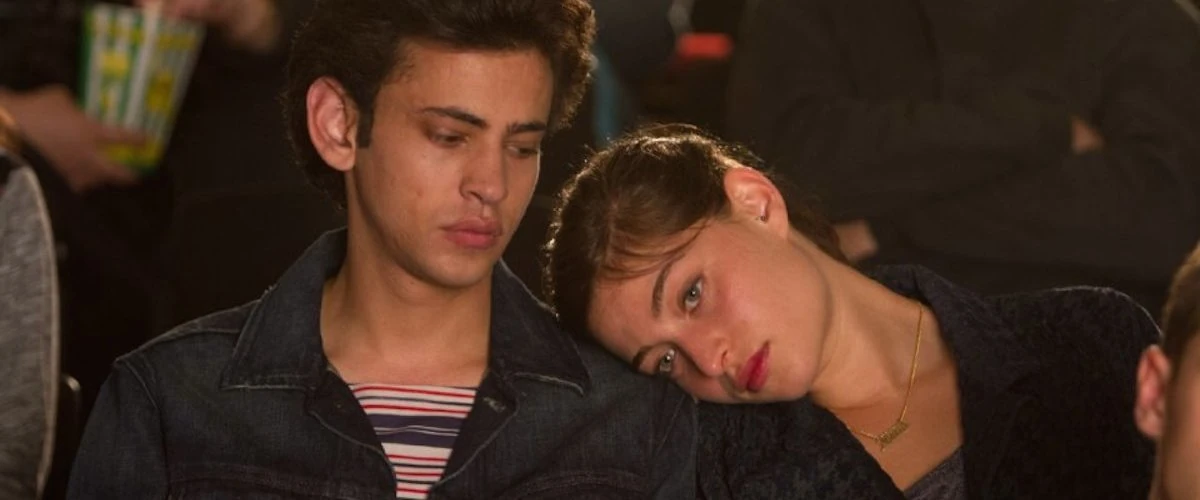

The extra twist in the movie is that along with the boy-girl story between Eyad and Naomi, there’s a weird (queer?) twist in the story of Eyad’s relationship with Yonatan, a boy of the same age who Eyad meets thanks to a volunteer initiative engineered by the school. Yonatan is disabled, with quickly encroaching muscular dystrophy, and he understands that he is not going to live any kind of active life into his twenties. He is therefore determined to live every day of his short life to the maximum. Eyad and Yonatan quickly become close, and Eyad becomes almost a second son for Yonatan’s mother, played by the beautiful Yael Abecassis (she was a model before she became famous as an actress, and is objectively quite beautiful)
It’s clear in the scene(s?) where Eyad is together with both Naomi and Yonatan that Naomi is not entirely comfortable. Is this tension between Naomi and Yonatan an unstated queer subtext? Hard to tell, and in all honesty it’s really not my theoretical strongpoint. Nothing is openly stated, and I think it’s up to the individual viewer to judge this question. I’m completely agnostic about it. What I can say, trying my hardest not to give a crucial spoiler, is that the final 30-40 minutes of the film will decide whether it is Yonatan or Naomi who have the deep formative influence on what Eyad is going to become.
Commenting on what Eyad does become would be an unforgiveable spoiler, which I will not allow myself to disclose here, but I will say that the ending of the movie contains within it a multitude of questions about what kind of identities are being created in this place. I can also say that the direction that Eyad’s relationships do in fact take somehow relates back to a comment that I already made when talking about possible theoretical explanations for the number of gay relationships. Sorry if that’s annoyingly cryptic, but really, I can’t say any more than that.
2. & 3. Out in the Dark and The Bubble
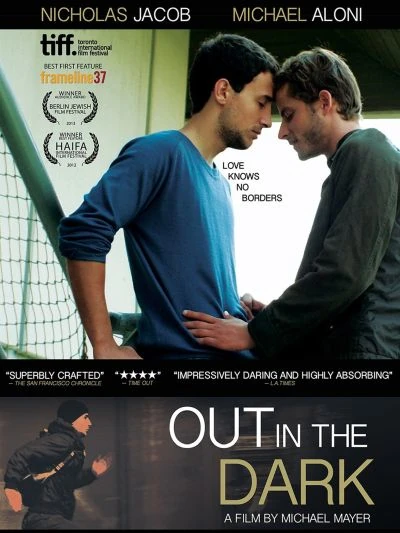


Having discussed the possible queer reading of A Borrowed Identity (on which I remain entirely agnostic) let’s proceed directly from that to the two films here which feature concrete cross-community gay relationhsips. It’s probably interesting and useful to place them together and to think about both the similarities and the differences. It sounds ridiculous, maybe, to comment that I’m in a particularly sensitive spot here, since it’s the bloody Middle East, and everything is sensitive, but OK just for the tape I need to acknowledge that there’s a whole subgenre of anti-Israel criticism which uses the word “Pinkwashing” to describe the way that Israeli governments (left and right, but of course ever more right these days) instrumentalise the topic of Gay Rights to seek to demonstrate Israel’s moral superiority over its neighbours, despite the obvious crazy and morally questionable shit that Israel actually does in the Middle East. I have read a bit around the subject, and I suppose I’ll have to read and think about it a bit more at some time, as I may write a fully independent post on the subject at some point. These two films will come into that, I guess, along with a few more that don’t do the cross-community thing. I’ve heard the kneejerk use of the term, the way it works with these things, from people who profess themselves to be more purely of the left than blurry liberals like me. And, what to say?????
Stet - I get bored of hearing such jargon in all honesty, but I acknowledge it. Let’s say that. I don’t hold the directors of these films - not these two at least - responsible for this phenomenon, nor do I assume that either of them undertook these projects as propagandists working on behalf of the Israeli state. They may have received funding, sure, but I don’t suppose that right wing bogeyman funders would be especially keen on encouraging such films. I don’t know, really. Maybe in a very very twisted reality where everyone is being manipulated, all of the time, such a thing is true. But give my head some peace. Let me just treat these films as works of art, made by artists aware of the politics around them but without the intention of proving some binary Israel Good ; Others Bad hypothesis. As ever on this blog, I shall say that it’s much more complicated than that, and anyone who doesn’t agree with me, fine, your choice.
The two films were made six years apart. I’ll start with the first - Eytan Fox’s The Bubble, made in 2006. The bubble referred to in the title is of course the small liberal bubble of well meaning “peacenik” bohemian Tel Avivis, people no doubt used to being pilloried in the rest of Israel as lefty surrender monkeys (this being around the time that that term was being operationally deployed in the USA). It’s a place where all the cultured people hang out in the same cafés, and so we see for example top Israeli actor Lior Ashkenazi (top Israeli on my actors list, at least) playing himself in this movie, in a relatively minor role, to give that feeling of authenticity.
The two major roles are played by:
- Ohad Knoller as Noam, who we see at the beginning of the film doing his army reserve duty at a West Bank checkpoint. In the midst of witnessing the tragedy of a Palestinian woman giving birth to a dead baby, his eyes meet those of Ashraf, a young Palestinian who was on the same bus as the woman.
- Ashraf is played by Yousef/Joe Sweid, who is quite an interesting person to look at as an Arab within the Israeli cultural world. In his own life, he’s gone quite a long way over on the spectrum in his career towards fully integrating with Israeli Jewish society, in the sense that he’s been twice married to a Jewish woman, and performed in a lot of Israeli dramas. I would hope at least that it’s pure coincidence that his second marriage ended around the time of the Gaza attacks in October 2023, but unfortunately I suppose it might not be, reading between the lines of what his Wikipedia page says. That’s now, though, and the film is from twenty years ago, when things were bad, yes - they’ve always been bad, obviously - but not polarised the way that they are now.
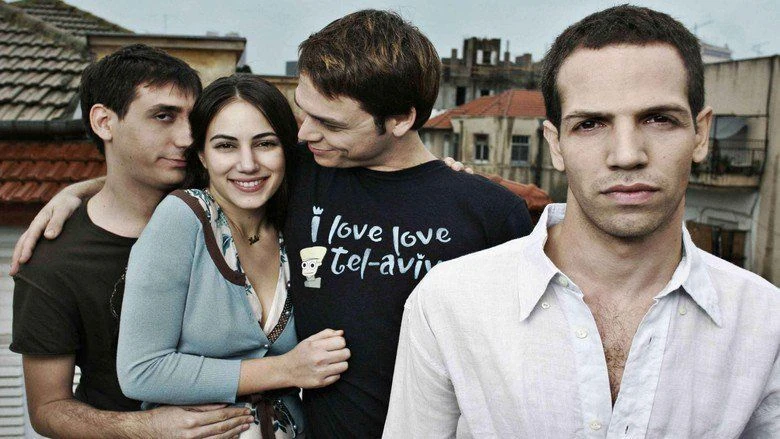
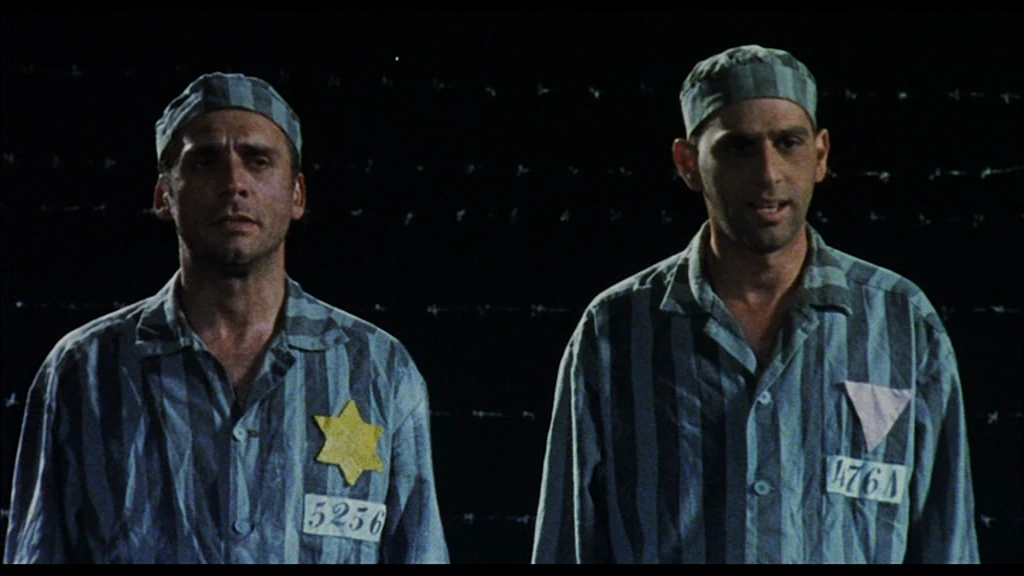
The story goes like this. In the confusion around the Palestinian woman’s still birth, Noam drops his ID at the scene, and it’s Ashraf who picks it up. Noam lives in a Bohemian flat share with a young woman called Lulu and another gay man, Yali, who also manages the café where the friends hang out, and where we also see Lior Ashkenazi. One day, while the flatmates are waiting for Lulu’s hot new boyfriend to come round, Ashraf turns up at the door with Noam’s ID. Clearly he’s delivered it in person for a reason, and it doesn’t take long for the first kiss to occur. Long story short, Noam fixes things for Ashraf to work in Yali’s café, but things go wrong one day when Lulu’s by-now-ex boyfriend spooks Ashraf, who is of course working illegally, after suggesting the idea of making a film for TV about Ashraf working in the café. Ashraf runs away, back to the West Bank, and Noam and Lulu find a ruse to locate him and persuade him to return to Tel Aviv. As a result, though, the necessary lies that Ashraf has been telling his family all this time begin to fall apart, and at this point it’s starting to become unsafe for Ashraf to stay there. Best to stop telling the story there. I’ve probably already given away too many spoilers for some, but there’s a lot more yet to happen leading to a pretty dramatic finale.
Looking at the constantly updated list of films that I’ve watched in this project, The Bubble is listed as #119, which I would estimate places the time of watching it around February or March 2024, and falls some time after I had started breaking through my film rating rules, à la Spinal Tap. Up until approximately film #70 I was dutifully scoring films out of 10, but around that time I got a bit emotional about some of the films and started to give them scores of 11/12/13. Eventually I went mad, and the scores got exponential, seismic, for the films that hit me hardest. Emotions go up and down with the general mood and circumstance, so it’s hard to say that my ratings are consistent when I look back at them. Whatever my mood was at the time, I suppose the score of 12/10 that I gave to The Bubble suggests that I thought it was a solid effort that tugged on a few heartstrings. Watching it again, my feeling is that it’s a naive work, and I don’t especially use that adjective in any negative sense. I feel like the naiveté was intentional, especially the characters of Noam and Lulu, and their mad escapade on the West Bank. I don’t mind it. I think that Eytan Fox wanted to make it feel like a bit of a fairytale, an explanation of some kind of ideal world in which this relationship is possible, despite the multiple factors making it unsustainable in that place.
That’s my carefully planned subtle segue to Out In The Dark. I think it’s a more realistic piece of work. I only gave it a very “normal” rating of 9/10, and that might have been due to the relative realism. It possibly didn’t hit me emotionally as much as The Bubble did. Not sure. Maybe it was just a function of the fact that I saw it at a time when I was getting more or less to the end of the list of Israeli and Palestinian films that remain queued up. Perhaps there’s a certain satiation, or over-familiarity, and possbily I would have reacted more emotionally had I watched it at the beginning. Whatever, that’s not how it was. I watched it recently, soon after picking up the trail again. I had stopped watching these films for quite a long time, because my mind was - understandably enough, I think - full to overflowing. I came to this one pretty fresh, then, and maybe the ratings had somehow reset in my mind.
The scenario of this film isn’t incredibly different in its basic premise from The Bubble. The film opens with Nimer (Nicholas Jacob), a Palestinian student, crossing the (pre-wall) border between the West Bank and Israel “proper”. He’s on his way to Tel Aviv to meet his friend Mustafa at a gay bar. Mustafa is part of a community of gay Arabs living illegally in Tel Aviv, because that risk is better than the risk of their sexuality being discovered in their own society. As in The Bubble, the relationship at the centre of the film picks up within the first minutes. At the bar, Nimer is struggling to catch the bartender’s attention, and gets helped out by a Jewish guy, Roy (played by Michael Aloni - see below for a bit more about him). They chat, and the relationship is on.
To a certain extent, Roy belongs to the same liberal Tel Aviv bubble as Noam, Lulu and Yali, but not the bohemian section. He is a lawyer, who in the daytime is negotiating hard commercial deals for characters that he doesn’t especially want to go out with for drinks after work. So there’s no starry-eyed idealism on his part about the obvious difficulties of getting into a relationship with a Palestinian, which is perhaps why (no spoilers!!!) the conclusion of this film is very different from The Bubble.
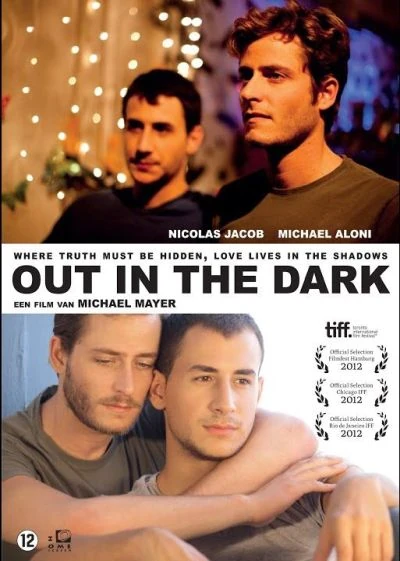
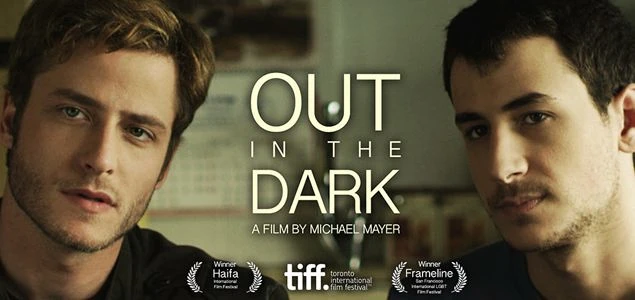
The other difference, I think, in this film is that it’s much more granular and hard-headed about the good people and equally importantly the bad people on both sides. Apart from an unsympathetic border guard, Noam’s commander, we’re not seeing too much of the dark Israeli side in The Bubble. In this film, we totally are. The essence of the plot, without big spoilers, is that Mustafa, Nimer and eventually - as a result of his relationship with Nimer - also Roy have to deal with Israeli police/secret service agents who have their own dark game, and for whom none of those three, Roy included, counts as anything other than a means to their ends. Nimer and Mustafa are of course trapped between these characters and the complete non-acceptance in Palestinian society of what they really are.
One interesting scene that I want to mention - not much of a spoiler, and it says a lot. About half way through the movie, Roy takes Nimer to meet his parents. They’re nice, and everybody is cordial enough. But then, while Roy’s dad is having a heart to heart chat with Nimer about his army service in the territories, Roy is in the kitchen with his mother, who is clearly not so cool about things. The irony of it is that, perhaps reading between the lines, I don’t have the impression that it’s about the general issue of Roy being gay. When she says “You could have informed us beforehand” it’s of course not about that. It’s the extra transgression, clearly, of the fact that the new boyfriend is Arab.
Maybe, looking at what I just wrote, I should be evening out my ratings for these two films. Doesn’t matter. Both of them are worth the effort.
4. Ajami
At the time of writing, Ajami is the inverse of Tel Aviv On Fire. It’s a film which deserves its own dedicated and equally long post, but that post hasn’t been written yet. I’ve got a podcast conversation about the film, the audio of which will hopefully be fully edited and uploaded soon, but a 3-4 thousand word post wouldn’t be out of place. It’s probably the most involved and interconnected film that I’m mentioning in this post, and the Arab-Jewish relationship shown in the movie is, if not a minor detail, not the kernel of the story. In fact, the tale of Binj, who is a chef in the Jaffa restaurant around which much of the action revovles, and his Jewish girlfriend (whose name I’m not sure we even learn) is not the only story in the film of a forbidden cross-commmunity relationship. There’s also a story of a Muslim guy and a Christian girl - both Arabs - for whom the boundaries are no less dramatic and tragic.
Since the film is so episodically complex and interconnected, it matters in this case very little, or even nothing at all, if I give spoilers about Binj’s relationship with his girlfriend. The film is broken up into five overlapping and deliberately unsyncopated episodes, and we see them in only two scenes within the fourth of the five episodes. In the first, they are driving happily, just the two of them, speaking about the future, laughing and finally kissing. We see them very obviously in love, apparently hopeful about their future together.



We then see Binj and his GF in the company of his friends from the restaurant and the neighbourhood, and now the dynamics are very different. Binj’s friends are speaking in Arabic, clearly unintelligible to her, even if she does know a little (all Israelis are expected to learn at least some Arabic at school). She is asking Binj what they’re saying, and she’s clear enough from his reluctance to answer her that the conversation is not flattering in her favour.
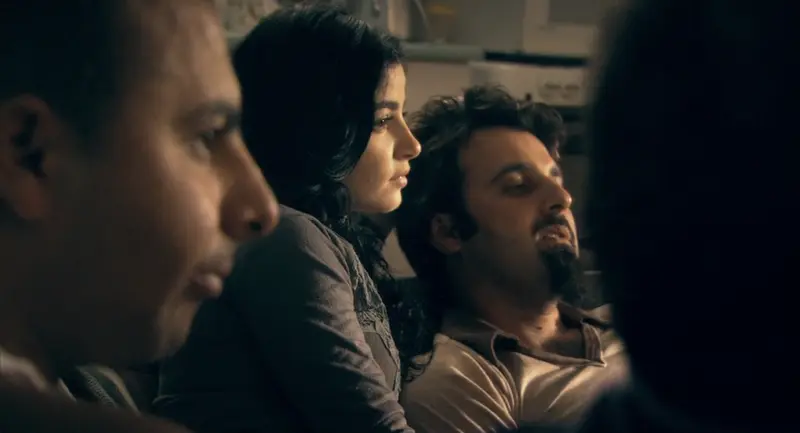
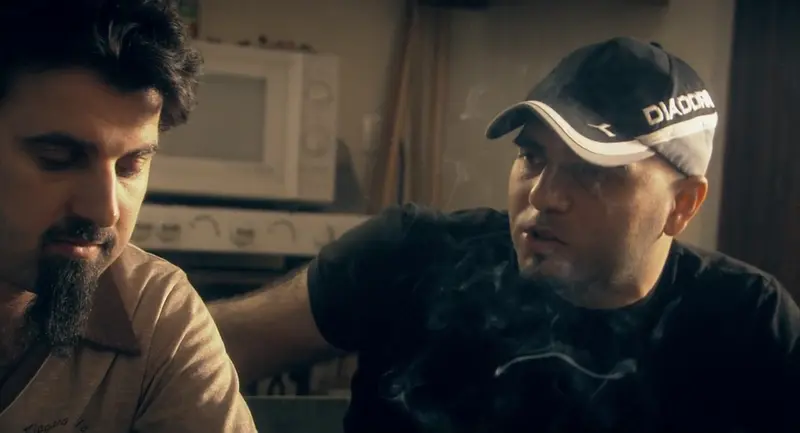
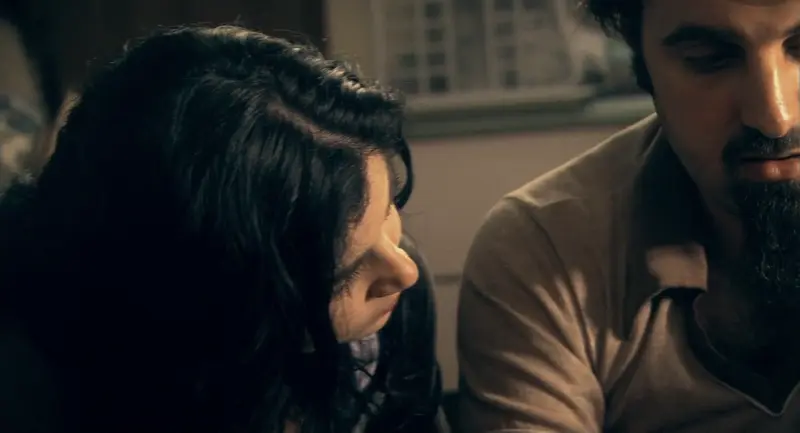
What Binj’s friends are saying to him is that they don’t approve of his plan to move to Tel Aviv with the girlfriend, and that it would essentially constitute an act of betrayal as far as they are concerned. She doesn’t need Binj to translate for her. She soon understands the essence of what is going down. What makes Ajami such an extraordinarily dense and rich film is that this sequence takes place in the space of just two or three minutes (maybe even less), but expertly illustrates so many of the tensions that I am talking about here. It’s the docudrama style that makes it so hard-hitting. There’s that genunine feeling of verisimilitude and lack of artifice that is so powerful when the technique is applied correctly.
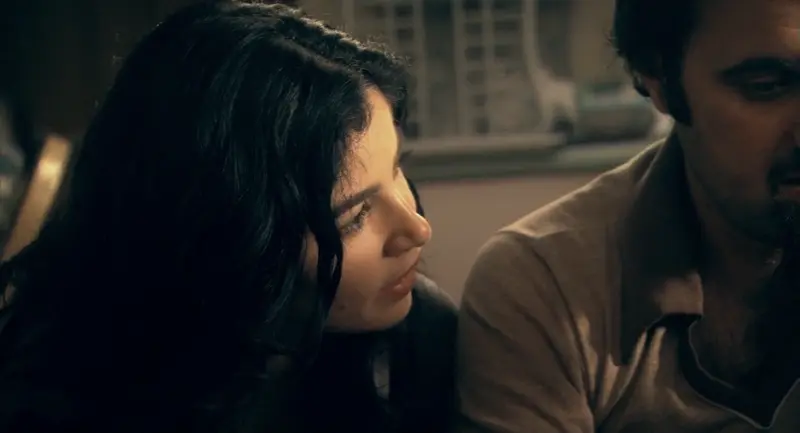

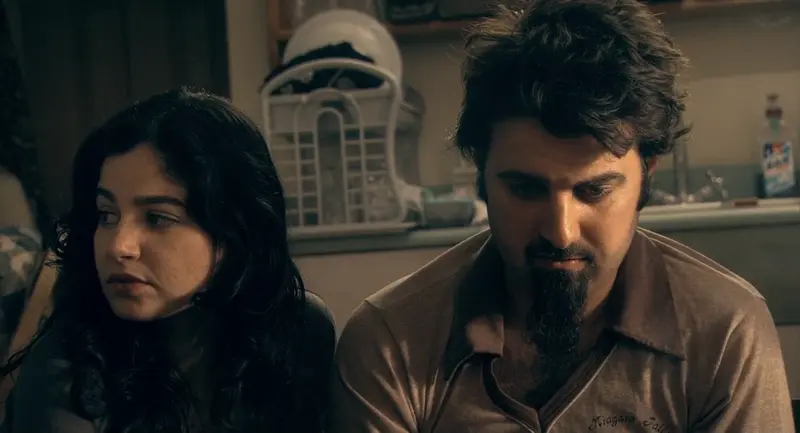
Not much more to say on that one. It’s such a short snapshot, and there are soooooooo many other things going on in Ajami that I will absolutely have to return to it another time.
5. The Band's Visit
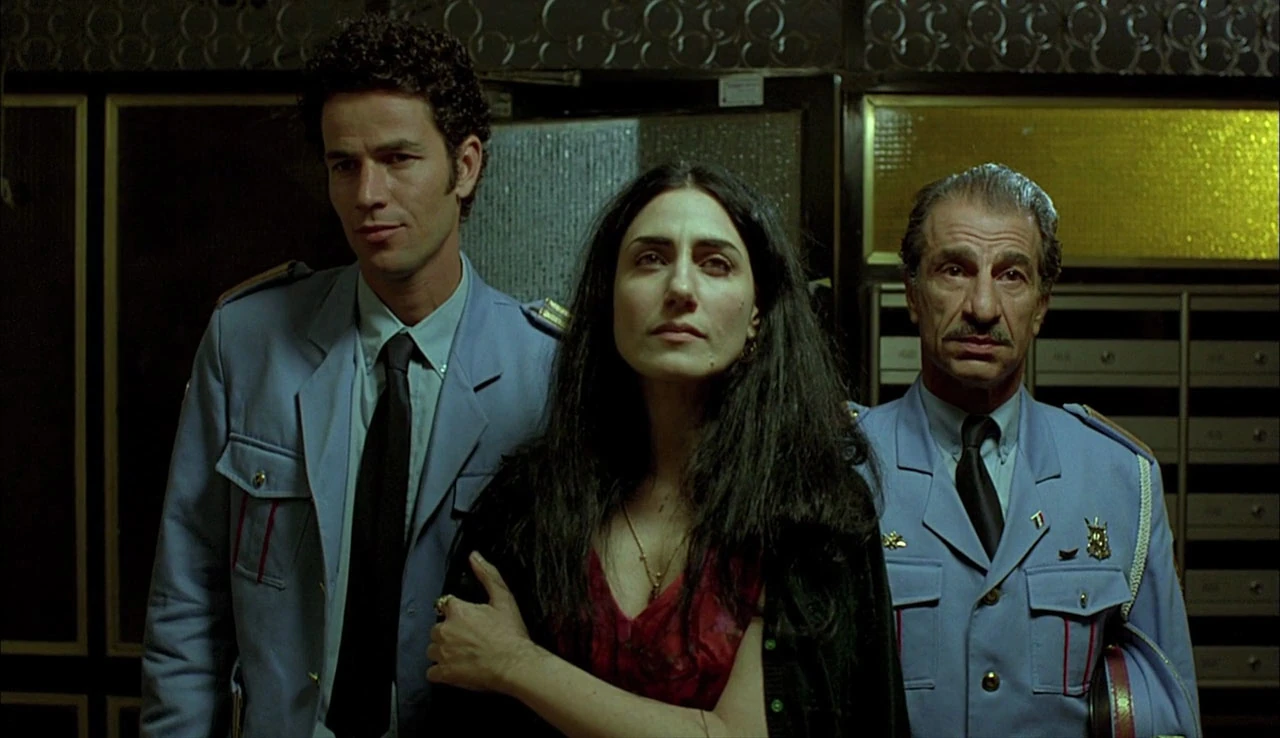
There’s something weirdly meta in talking about this film. Have a look at the picture to the right. In the centre you have the French-Moroccan Jewish Israeli Ronit Elkabetz. On the left is Palestinian Arab (Israeli by citizenship) Saleh Bakri. On the right is Iraqi Jewish Israeli Sasson Gabai. In this film, Gabai plays the conductor of an Egyptian police orchestra on a friendship visit to Israel, and Bakri plays his deputy. After coming through the airport, the band get on the wrong bus, due to their mispronunciation of the actual destination. They’ve ended up stranded for the night in a small town in the Negev, instead of their actual destination, Petah Tikva, which is part of the Greater Tel Aviv area. That’s the shtick. Ronit Elkabetz plays the owner of a cafê, Dina, who feeds, waters and accommodates the two band leaders, while the rest of band stays with other locals.
What is so “meta”, then? Well, the first thing to think about is that we of course have Sasson Gabai, an Israeli Jewish actor, playing the formal and “correct” but very obviously lonely Egyptian band conductor Tawfiq. Cue loud jeers from the far left of he hemicycle. Ironic that the people who would fiercely advocate for colour-blind casting are quite likely to be the same ones who will decry this act of settler colonialist cultural appropriation. Anyway, it’s quite a common thing for Israeli Jewish actors to portray Arabs, because - GUESS WHAT - lots of them came from the Arab World and speak Arabic like a native tongue. Some readers may have seen the 2008 BBC docudrama series House of Saddam, and may have found the acting very convincing, without knowing that the guy playing Saddam, Yigal Naor, is Israeli, as is Uri Gavriel playing the infamous Chemical Ali. Both of them, like Sasson Gabai, are of Iraqi Jewish extraction, so…. It’s fair enough, I reckon. That’s meta point #1, leading to the question of whether it’s “authentic” for an Israeli actor to play an Arab in a film where the story is about him (not exactly) getting involved with an Israeli woman.
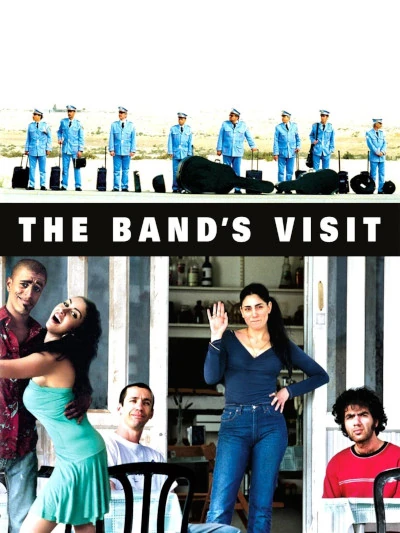
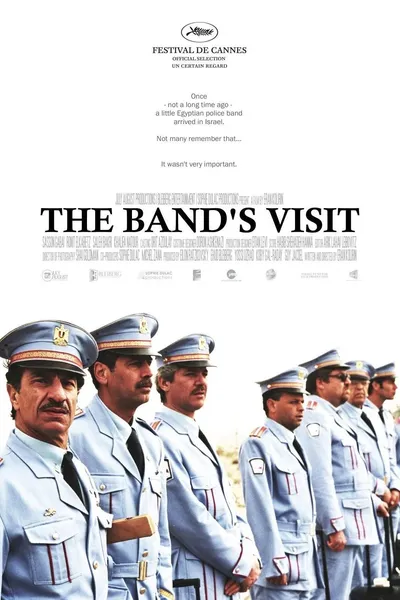
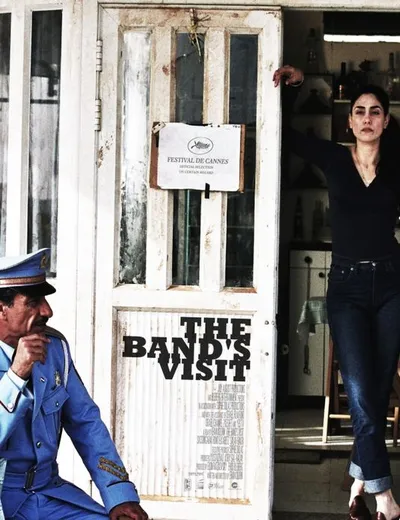
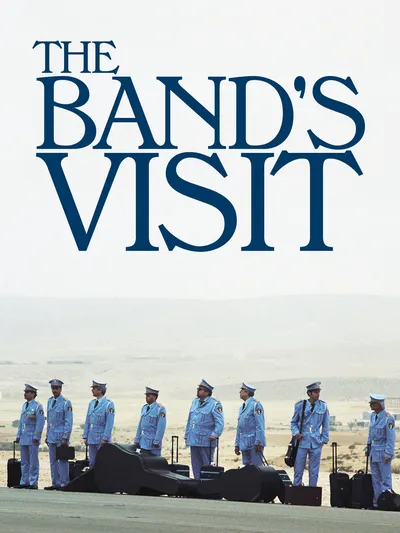
Meta point #2 feeds directly back into meta point #1. The Band’s Visit appears to have been Saleh Bakri’s last Israeli production. He won the Ophir Award for Best Supporting Actor, as Tawfiq’s deputy, Khaled, and then…. He never worked in Israeli cinema again. In a 2013 interview, Bakri explained his decision: “Since then I have not done any Israeli films, even though I have received many offers.” The turning point was watching his father, actor and director Mohammad Bakri, face a decade of legal persecution, death threats, and public censure over his 2002 documentary Jenin, Jenin, which documented Israeli war crimes. Bakri Jr. noted that “not one of [his father’s] supposed Israeli friends came to support him in court… It made me think a lot about why I participate any longer in Israeli films.”
Bakri was explicit about his reasoning: he opposed how his appearance in Israeli films was being used to “make Israel look good” and to present it as a diverse, democratic state. “I was born a Palestinian and will remain a Palestinian. I don’t believe that I could even be called an Israeli.” (despite the passport, obviously)
So the irony of The Band’s Visit is that there was some kind of feedback loop in operation behind the scenes of a sad and wistful but nonetheless hopeful film about Arabs and Israelis discovering their shared humanity. It’s a superficially beautiful piece of art that is simultaneously a document of the impossibility of it all. The very conditions that made the film possible (Bakri’s participation) couldn’t be sustained, and as a result of actions like Bakri’s, any Israeli drama that attempts to depict Arabs, including those that approach the subject without the intention of stereotyping or diminishing, is ever more likely to end up leaning on Mizrahi Jewish actors for Arab roles. Cue jeers about cultural appropriation.
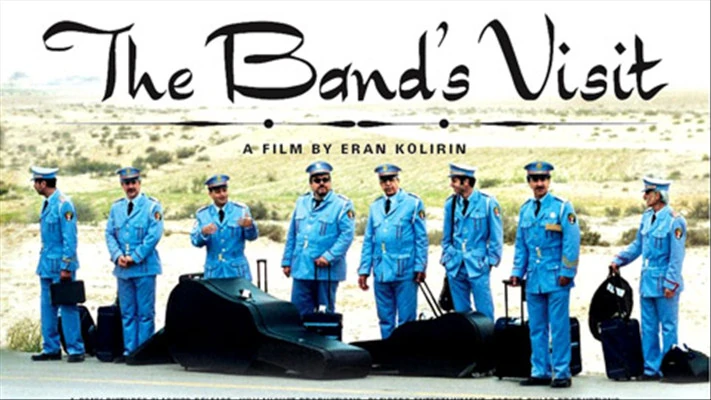
Truth is, after all that meta stuff, that I’m not sure of the point of discussing the plot of this film. For one thing, not sooooo much really happens. The trailer gives you a reasonable idea, and there’s not too much for me to say about it. When I say “not much happens”, I don’t at all mean to imply that it’s boring. It’s sweet and lovely, almost by virtue of that fact. The trailer describes it as a comedy. I’m not sure that I would call it that exactly. It’s definitely not a comedy in any kind of slapstick sense, but the one thing that it isn’t is a tragedy in which people’s lives are destroyed by the divisions between them. It’s that meta commentary on the actual divisions which adds layers of interest.
Platonic Odd Couples
Not that The Band’s Visit is entirely platonic, but it’s gentle enough to be the film from which we can transition to the final two films, which do not feature consummated cross-border relationships. Both of them do, however, feature one of my favourite actors, Qais Nashef, in very different roles - one quite tragic and the other lightly comic. What they have in common, though, is that they’re navigating that border and their ability or otherwise to cross it lies entirely in the hands of an Israeli stranger’s intervention.
6. Abu Omar
In Abu Omar Nashef plays a father, Salah, devastated by the death of his infant son after a failed heart operation, devastated to the point of suicidal, and now facing the ordeal of transporting the body back home, through Israeli checkpoints. The pulse of the film’s drama comes from the fact the border has been closed, with no exceptions, due to a terror attack. Salah is stuck with his dead son’s decomposing body and no way home. The background is tragic, but the audience can take hope from the unexpected relationship which he forms with Miri (Shany Verchik), a Jewish woman who goes out of her way to help him get home, in a determined act of humanism. That’s the plot, in a nutshell. The story is just about the ins and outs of how they figure the situation out. Of course it’s a horrific idea, but sometimes the film is actually quite funny, in a very macabre way of course.
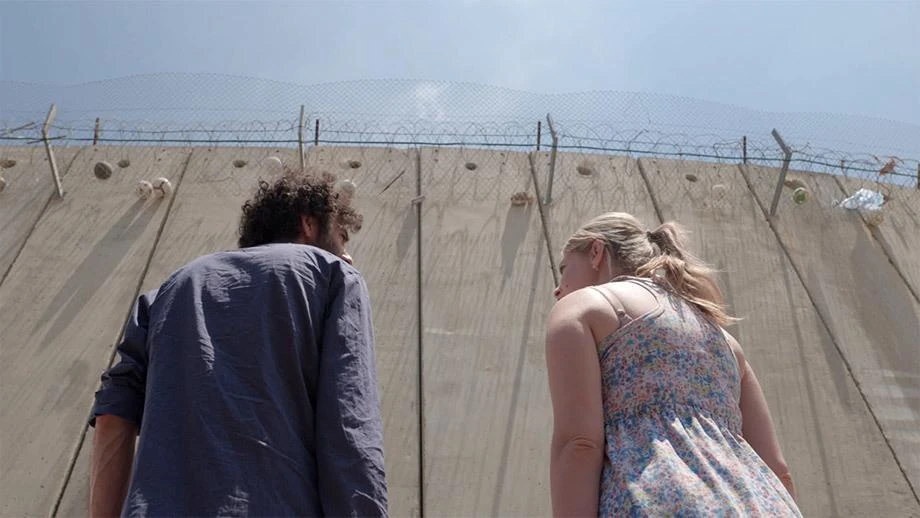
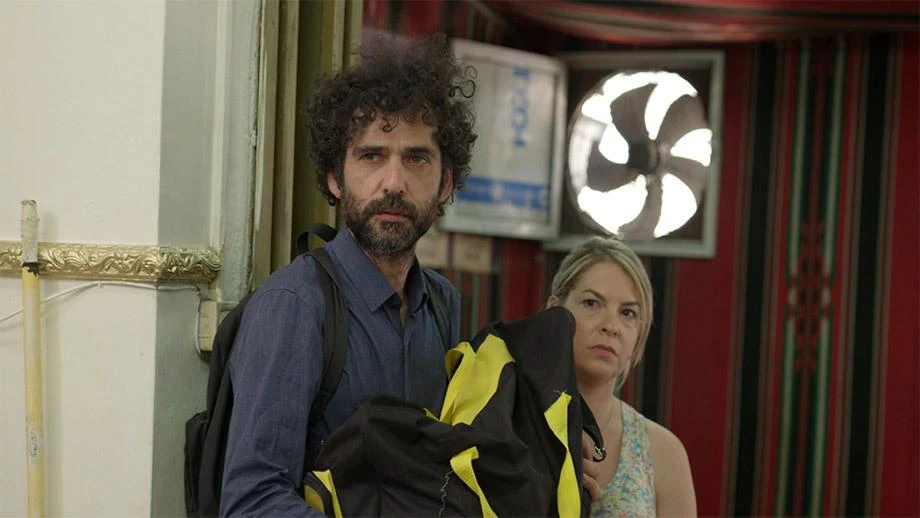
What makes their partnership compelling is precisely its contingency - Miri has no personal connection to Salah, and there’s no romantic driver. It would be wrong, though, to say that there’s no political motivation in Miri’s actions, and that she’s not somehow making a statement. In the first scene where she is introduced, we see her selling subscriptions to Ha’aretz, Israel’s oldest and most liberal daily newspaper, and towards the end of the film Salah briefly lashes out at her for being a do-gooder. Unfair to her, but understandable from a man in his situation. Of course it’s true that she’s acting on some core political beliefs, but ultimately we can see that she just sees a man in an impossible situation and decides to help. Salah, in his grief and desperation, has to trust this Israeli stranger. The film finds dark comedy in the bureaucratic absurdity they navigate together. Their growing rapport isn’t about transcending the conflict or discovering shared humanity in some profound way. It’s simpler and stranger than that: two people problem-solving together under grotesque circumstances, finding some moments of grace in the gaps between catastrophes.
7. Tel Aviv On Fire
There is already a pretty long article on this blog about Tel Aviv On Fire, so I don’t intend to add too much here. I already wrote quite a lot in that post about the development of the strange working relationship between Salam (played by Nashef) a writer on a cheesy Palestinian soap opera about the 1967 Six Day War, and the Israeli border guard, Assi (Yaniv Biton). Maybe it’s interesting to focus here on the complications of their relationship, which - despite the fact that it is of course entirely platonic, and certainly without any queer subtext (unless someone wants to prove me wrong!) - works on more levels than some of the other relationships, due to the fact that Assi is himself of Middle Eastern and not European Jewish descent. Their exchanges are so full of code-switching between Hebrew and Arabic that I could theoretically (and maybe one day I will) write a whole post analysing the way they move effortlessly between the two languages, and of course who and what causes the switching.
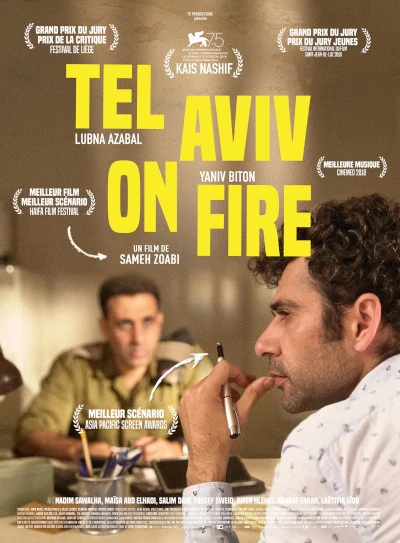



More often than not it’s Assi, as the one who has the power in this particular relationship, at this particular moment in Arab and Jewish history, who causes the switches; but of course that doesn’t stop us asking the question of why he initiates the switch in each case. What emotional impulse causes it? What kind of internalised historical anger against the Arabs who expelled his parents or grandparents, compounded with his anger against the European Jews who put him in charge of a border post dealing with the Palestinian problem that they themselves don’t want to and can’t deal with like he does? (I think the answer to the question is in the question)
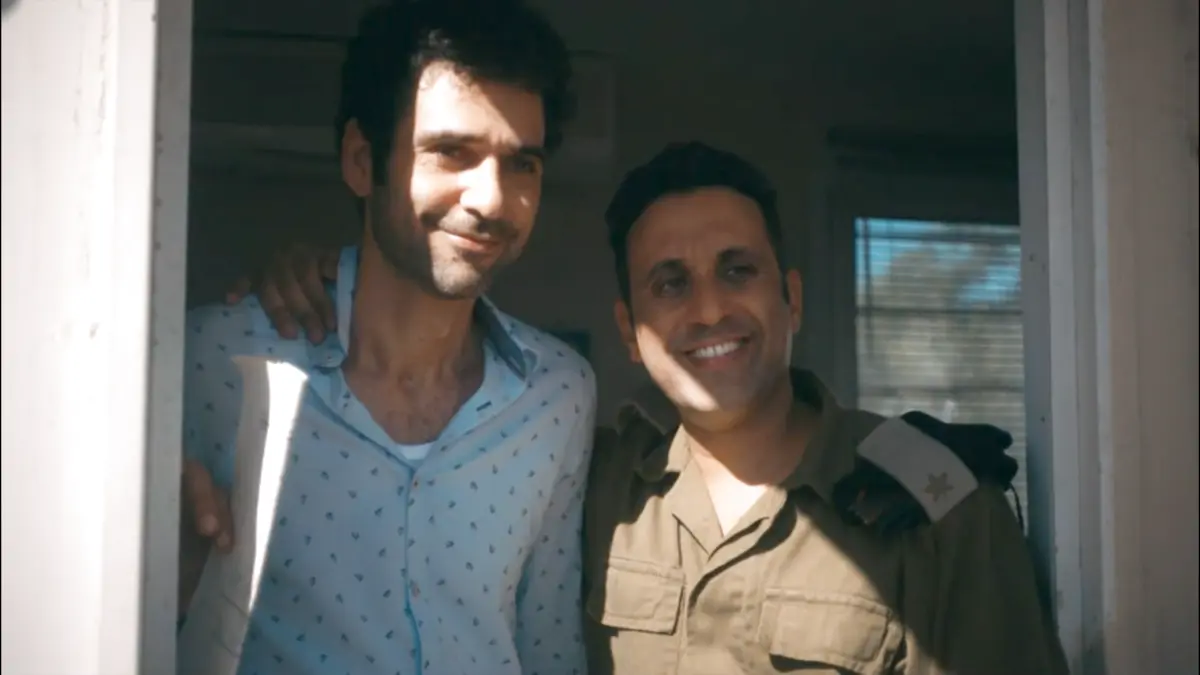


How does the stereotyping of the Ashkenazi Israeli general in the soap opera and the wilful blindness of the Palestinian producers to the existence of an Arabic speaking Jewish population in Israel (for obvious ideological rhetorical reasons) wind Assi up sufficiently to be driven to interfere so directly in the writing of the series? We’re working on more than one level here, as it’s the relationship between the Arab spy, Manal, and the Israeli General Edelman in the soap opera which Assi is consciously trying to shape. Assi wants her to accept him, indeed to forget her mission of sabotage and fall in love with him. That story is all very silly, of course, but the subtext isn’t, and the film has its serious moments.



Can’t remember if I mentioned this in the long post….. I think it’s revealing that when I told Fabrizio that this film is a comedy, he completely disagreed with me! Clearly he hadn’t seen enough films from the Middle East to understand either the Jewish and Arab humour that comes out of the sides of this film, nor had he seen enough of the other films to see what he would be comparing it with. What I love about the film is that the relationship between Salam and Assi is left open all the way to the end, without any pretence that all the difficulties have been solved. There’s a pragmatic hope that I take from it, and I’ll repeat something that I know I did say in the long post - it’s a film that I turn to again and again when I need cheering up a little.
Final Observations
I commented earlier that the disproportionate number of gay relationships in the films that I’ve sampled isn’t something that I would choose to lean on in any kind of statistical manner. Likewise I only observe, without concluding anything, that all the straight relationships - consummated or platonic - that we’ve seen here are between an Arab man and a Jewish woman. Apart (granted) from the absurd fictional relationship of Manal and General Edelman in Tel Aviv On Fire, we don’t have a Jewish man and an Arab woman. Of course a film containing such a relationship must exist somewhere at least, but I just haven’t seen it up until now. Exactly what this would say about the social dynamics and power relationships is a potentially interesting question that I could ask if I had any data to look at!

A Shtisel Section
Two Shtisel addenda for this article. Firstly we’ve got the star of the show right here. Well, one of two I suppose. Shtisel Senior hasn’t turned up yet (in fact he’s not in many of the films here), but here we’ve got Akiva, Shtisel Junior, who is played by Michael Aloni. It’s quite a peculiar phenomenon that an actor in a series about Orthodox Jews in Jerusalem became some kind of hunky sex symbol for thinking women, not only in the Israeli and Jewish world, but Akiva is a very engaging character with a deep inner life, and well….. there are three series and he’s at the middle of everything, so there’s no point getting into the nuts and bolts of what it’s like to be Akiva. GO WATCH SHTISEL.

Finally, we talked a lot above about Sasson Gabai, an Iraqi Jew, playing an Egyptian. Demonstration of impressive range - in Shtisel we find him playing Akiva’s scheming uncle and (gulp!), father-in-law, Nuchem. Range? It’s a Jew playing a Jew, right? Well, Nuchem is an Ashkenazi Jew from Antwerp (there’s a big diamond business there - I can’t remember if Nuchem is directly involved in that, but he’s always up to something). Range. It’s a long way from Baghdad to Belgium. Can an Ashkenazi Jew play a Mizrahi, the way that Gabai is moving around here? Maybe yes, but I’m not sure that I’ve seen it in the films I’ve watched.